"Publishers who choose to opt out of AI may eventually find themselves opting out of search experiences they previously expected to participate in."
For much of the past year, publishers have debated whether to allow their content to be used in Google's AI-powered search experiences. Some viewed it as a licensing question. Others viewed it as a traffic question. Google's latest search experiment suggests it may increasingly become a visibility question.
According to reporting from Search Engine Journal, Google is now placing Top Stories carousels directly inside some AI Overviews, rather than displaying them as a separate search feature further down the page. NewzDash, which tracks publisher visibility, estimates this is already occurring in roughly 15.5% of U.S. searches where Top Stories appear. At first glance, this might appear to be a relatively minor interface change. It is not.
AI Is No Longer a Separate Destination
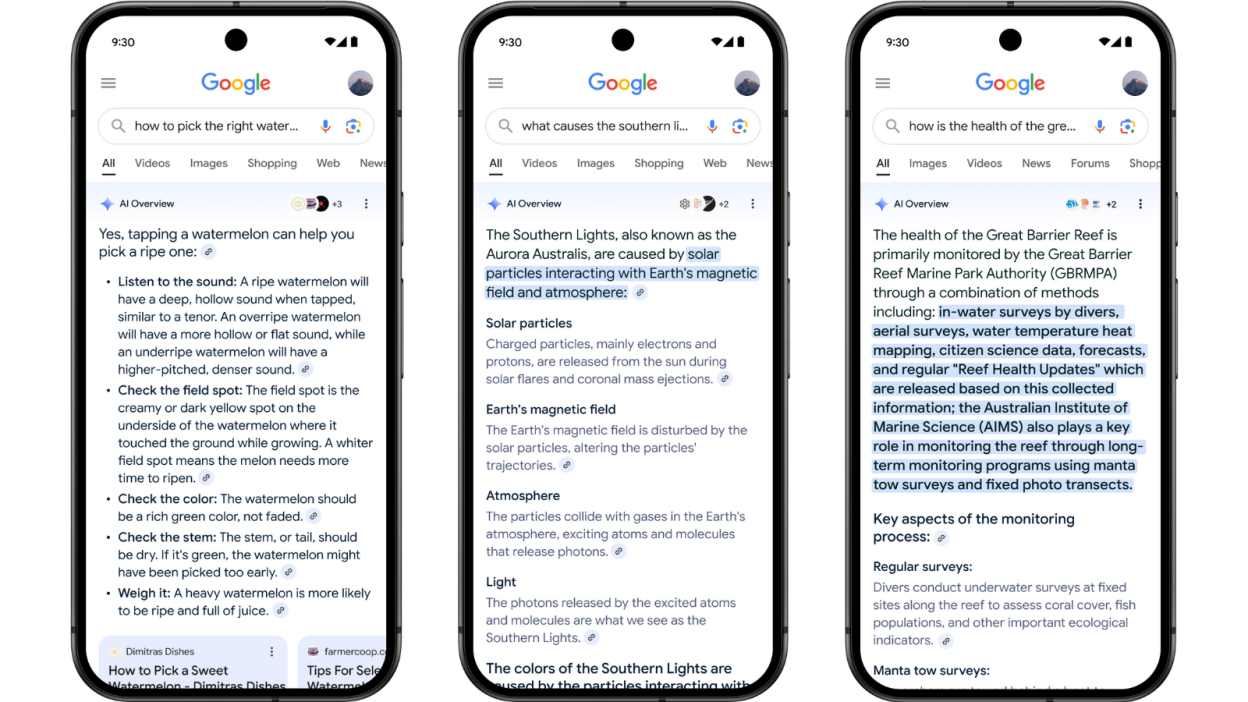
For the past two years, marketers have often discussed AI search as though it existed alongside traditional search. That distinction is becoming harder to defend. Google is not simply adding AI to Search. It is increasingly embedding traditional search features inside AI-generated experiences.
The implication is significant. Publishers who choose to opt out of AI may eventually find themselves opting out of search experiences they previously expected to participate in. Whether that becomes Google's long-term approach remains to be seen. But the strategic calculation has clearly changed.
Participation Is Becoming the Default
Many publishers initially hoped they could preserve traditional search visibility while declining participation in AI-generated answers. That separation may become increasingly difficult to maintain. As AI features become more deeply integrated into Google's core search experience, participating in AI may no longer be a question of chasing a new channel. It may simply become part of participating in Search itself.
For marketers, that has broader implications than publisher strategy. If Google continues integrating AI-generated answers with established discovery features, brands may find that AI optimization shifts from an emerging capability to a baseline expectation.
AEO Is Becoming Less Optional
One of the defining characteristics of new marketing channels is that early adoption is usually voluntary. Eventually, the channel becomes infrastructure. We are beginning to see that transition with AI search. Whether or not Google's current experiment becomes permanent, the direction is becoming clearer. AI is moving from an additional search feature to a foundational layer within search itself.
For brands, the question is becoming less 'Should we optimize for AI?' and more 'Can we afford not to?'
References
[1] Search Engine Journal, <a href="https://www.searchenginejournal.com/ai-opt-out-may-cost-sites-a-google-top-stories-spot/" target="_blank" rel="noopener noreferrer" class="text-amber-700 underline">AI Opt-Out May Cost Sites A Google Top Stories Spot</a>, July 2026.
[2] NewzDash, Publisher Visibility Tracking, July 2026.
AEO Updates is published by The Prompt Group. Editorial decisions sit with the AEO Updates team, and any commercial relationship that touches a story is labelled on the page.